Geology museums of Britain: The Booth Museum of Natural History, Brighton
Jon Trevelyan (UK)
Fig. 1. A group of German schoolchildren enjoy a day out at the museum.
Those of you with a long memory (and an admirable loyalty to Deposits magazine) may remember that, several years ago, I produced a few articles on British geology museums, including the National Stone Centre in Derbyshire and Whitby Museum (the latter jointly with Dean Lomax). I have recently been spending some time working in the seaside town of Brighton and decided to reacquaint myself with the Booth Museum of Natural History, an to write about this quaint little gem.
Fig. 2. The rows of cabinets containing the Victorian taxidermy of collector, Edward Booth.
I am not entirely comfortable with the rows of cabinets full of stuffed animals containing the collection of Victorian taxidermy of collector, Edward Booth (Fig. 2) after whom the museum is named, but it is not that that attracts me to the museum. Rather, it is a smallish backroom housing a collection of geology – found predominantly in Sussex, but also elsewhere in Britain and the world.
Fig. 3. A large set of gypsum crystals among other mineral exhibits at the museum.
While there are iguanodontid dinosaur bones from Sussex on show, there are also large mineralogical and sedimentological specimens (and apparently petrological slides in a microscopy section, which I was not aware existed). There is also material from the elephant beds beneath Brighton, with ice age mammal fossils and subfossils.
Fig. 4. Echinoids: Stereocidaris sceptrifera (left), Tylocidaris clavigera (middle) and Phymosoma keonigi spines (right) from unknow locations.
However, it is the chalk fossils that make this museum a must for anyone who loves palaeontology. These are as good as any I have seen and I hope the pictures accompanying this article show this. On your way to Brighton, for example by train, you will cut through the chalk ridge of the South Downs, so it is no surprise that the museum concentrates on the fossils of the Upper Cretaceous. However, the quality is superb. In the displays, there are as excellent examples of crinoids, fish, echinoids, bivalves, ammonites, belemnites and more as you will see anywhere.
Fig. 5. Rays and sharks: Lamna appendiculata (vertebrae), Ptychodus (ray teeth) and L appendiculate (sharks’ teeth) from the Southerham Grey Pit. (Strictly speaking, it should be Cretolamna appendicula as L appendiculate is a synonym, but this is what the label at the museum reads.)
Fig. 6. Hoplopteryx lewisiensis from the Southerham Grey Pit.
Fig. 7. Ammonites: Acanthoceras rhotomagense (top), Collignoniceras woollgari (middle) and Mantelliceras mantelli (bottom) from unknown locations.
Fig. 8. A marine reptile: Mosasaurus gracilis.
Fig. 9. Sponges: Doryderma dichotomum (bottom middle and right) and Ventriculates infundibuliformis (top right). All specimens from Sussex, including Brighton and Glynde.
Fig. 10. Bivalves: Inoceramus lamarcki (centre), Inoceramus inconstans (right), Inoceramus labiatus (left) and Pecten beaveri (bottom), all from Sussex locations, including Brighton, Newtimber and the Southerham Grey Pit.
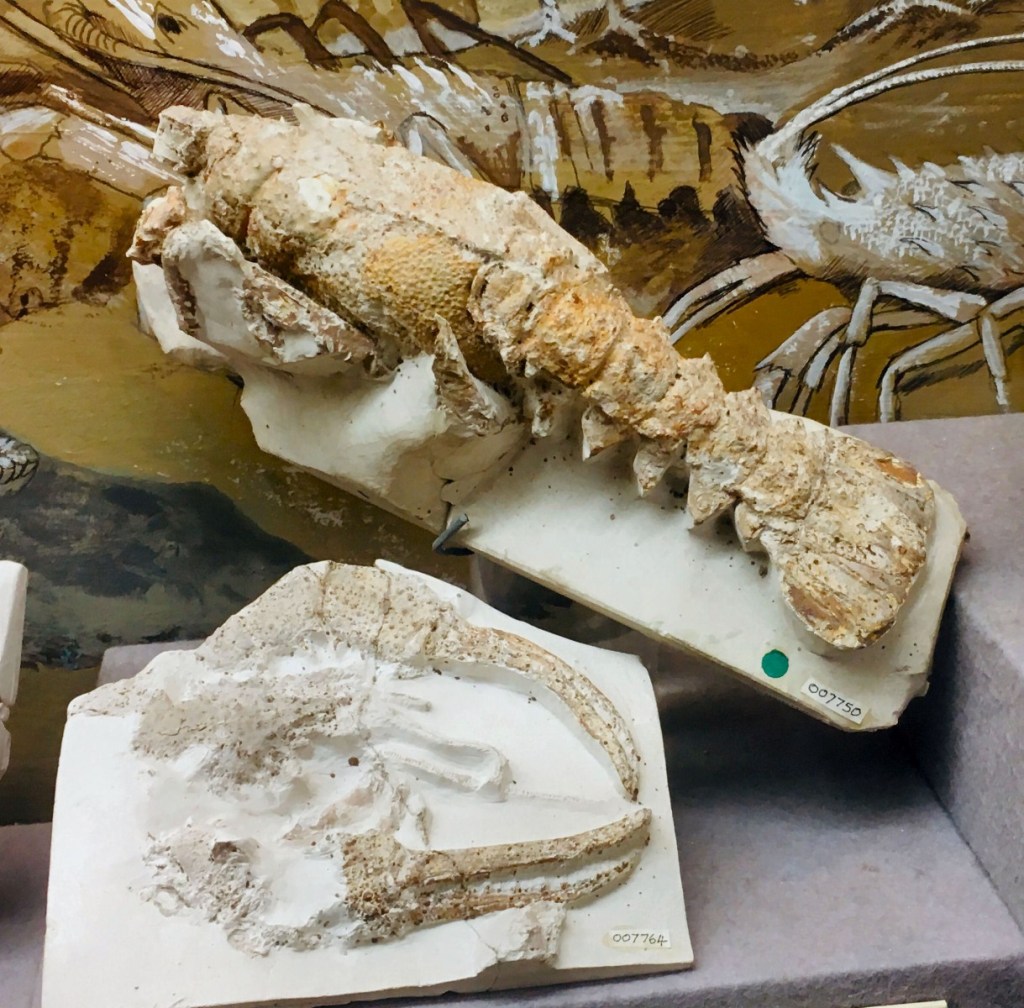
Fig. 11. Lobsters: Enoploclytia leachii (bottom) and Papeastacus sussexiensis (top), both from the Brighton area.
Fig. 12. Pentacrinus sp, from Malling.
Fig. 13. Belemnites: Belemniteila mucronata (top three) and Actinocamax plenus (bottom three), from Sussex localities incuding Brightion, Newtimber and Clayton.
I thoroughly recommend a visit to this little museum – it will be well worth a visit to Brighton.