
Category: North America


Geological anomalies: Chalcedony breccia in a cinnabar matrix and the disappearance of Michigan’s geology professor
Steven Wade Veatch (USA) Hidden among geological marvels at a mineral show was a cinnabar-bearing chalcedony breccia-specimen (Fig. 1). The term “breccia” refers to a rock composed of angular fragments, while “chalcedony” describes a type of cryptocrystalline quartz. Adding “cinnabar” specifies the presence of mercury sulphide, which creates a distinctive … Read More

Providing deep benefits to the deep Pocomoke River
Deborah Painter (USA) The famed English explorer of the “New World”, Captain John Smith, led expeditions during the early 1600s to create charts and plan settlements along the east coast of the United States, from what is now Virginia to Maryland and, on a subsequent voyage, New England. Smith’s map … Read More

Trace fossils of Redhill Ridge’s Dakota sandstones
Chris Retzlaff (USA) The Redhill Ridge area in Park County, Colorado is a hogback composed of Dakota Sandstone. This fine-grained, Cretaceous sediment – near the town of Fairplay – contains trace fossils (Figs. 1 and 2) that help palaeontologists understand what the environment was like there, more than 65 million … Read More

Dinosaurs at the Nebraska State capitol
Neale Monks (UK) Not many palaeontologists would go on a field trip to the Houses of Parliament in London, but if you do something similar in the state of Nebraska, you will be surprised to find a whole variety of prehistoric life, including dinosaurs (Fig. 1), ammonites and trilobites. The … Read More

A tiny waterfront town’s Big Fossil festival
Deborah Painter (USA) The breezes from the estuarine Pamlico Sound, which reach the tiny coastal town of Aurora, North Carolina in the USA along a meandering tributary, sometimes carry the evocative and not unpleasant ambiance of salt, mixed with decomposed estuarine life, such as fish, clams, crabs and other “shellfish”. … Read More

New carnivorous dinosaur discovered in suburban Laurel, Maryland
Deborah Painter (USA) Dinosaur fossils in the United States are mainly associated with the Mesozoic era age sedimentary rocks of the western states of Montana, Wyoming, Colorado, Arizona and New Mexico. East of the Mississippi River, their fossils are scarcer, although they definitely exist. There is Mesozoic age surficial bedrock … Read More

Book review: The Lewisian: Britain’s oldest rocks, by Graham Park
Recently, I have finished the Great Silurian Controversy, a magnificent book about the nineteenth century arguments over the age of the lower Palaeozoic greywackes/sediments of Devon, and the creation of the concept of the Devonian. And reading The Lewisian: Britain’s oldest rocks by Graham Park, perhaps it occurs to me that this should perhaps be called, The Great Lewisian Controversy. It shares the same historical and scientific intentions, and the same grand sweep of scientific history from the early twentieth century, namely, the exploration over decades of the geology of the Lewisian of northwest Scotland.

Conulariids: Fossilised jellyfish
Maria C Sendino and Paul D Taylor (UK) Fossils such as ammonites, trilobites, crinoids and shark’s teeth understandably attract the most attention from fossil enthusiasts. However, other groups can provide equally fascinating insights into the history of life and ought not to be neglected. Among these ‘Cinderella fossils’ are conulariids. … Read More

Salkhan Fossil Park, India
Khursheed Dinshaw (India) The Salkhan Fossil Park is located in the state of Uttar Pradesh in India. Spread over 25 hectares, it is an important geoheritage site for stromatolites. These stromatolites were identified by Professor RC Misra and Professor S Kumar of the University of Lucknow. Stromatolites are layered sedimentary … Read More

How does our fossil garden grow?
Deborah Painter (USA) Plant fossils come in a wider variety than this author used to believe. This article will discuss some of the different ways that plant fossils are preserved. Casts The fossil in Figs. 1 and 2 is a cast of Stigmaria. It is comprised of greyish sandstone. Sandy … Read More

The disparids: Weird and weedy crinoids of the Palaeozoic
Stephen K Donovan (Netherlands) and David N Lewis (UK) Palaeozoic crinoids are uniformly beautiful and come in many shapes and sizes, but almost all fall into one of three principal groups. The camerates are the largest and most robust, commonly incorporating the lower part of the arms into an enlarged … Read More

Locations in Nova Scotia (Part 3): Wasson’s Bluff – a locality near Parrsboro
George Burden (Canada) The Wasson’s Bluff fossil site, near Parrsboro, is the most geologically recent, yet perhaps the most fascinating of the locations of interest to palaeontologists in Nova Scotia. Located on the Bay of Fundy’s Minas Basin, fossil buffs can view what are perhaps the smallest dinosaur footprints ever … Read More

Locations in Nova Scotia (Part 2): Blue Beach – a locality in the Annapolis Valley
George Burden (Canada) In this second article on fossil locations in Nova Scotia in Canada, I will discuss the fascinating site of Blue Beach. This is perhaps the least known and most under-appreciated of the three major fossil cliffs in Nova Scotia. Most residents of the province (including me, until … Read More

Locations in Nova Scotia (Part 1): Joggins – a Carboniferous fossil forest
George Burden (Canada) There are three fossil sites of major interest to both professional and amateur palaeontologists in Canada’s east coast province of Nova Scotia. These are the Upper Carboniferous Horton’s Bluff/Blue Beach site, the Parrsboro fossil site at Wasson’s Bluff (which just post-dates a mass extinction event at the … Read More

Ice, dykes and tectonics: The Plattsburgh story
Deborah Painter (USA) As our small passenger jet began its descent into the Plattsburgh, New York International Airport on a cool November day, I admired Lake Champlain to the east from my window and noticed that the small aircraft, once it touched the very long runway, continued rolling down it … Read More

Stones that illustrate themselves
Deborah Painter (USA) Earlier in the month of September 2022, my friend David and I spent an afternoon with a fellow named Ellery, a long-time member of a rock collecting club we joined a year ago. Ellery allowed me to photograph some of his rock and mineral specimens, including a … Read More

It doesn’t always have to be dinosaurs: A short review of rauisuchian archosaurs
Stephan Lautenschlager (Germany) and Dr Julia Brenda Desojo (Argentina) Among the multitude of fossil animals, dinosaurs have always been the most popular and fascinating. Loved by six-year-olds, Hollywood directors, toy-designers and scientists alike, they not only dominated most of the Mesozoic Era, but still dominate our understanding of palaeontology. However, … Read More

Pennsylvania’s forests looked different in the Carboniferous and Early Permian
Deborah Painter (USA) A singer named Perry Como caused this article to be written. Perhaps it would be more correct to credit his statue. My friend Richard and I took a road trip in June 2018 to a conference in Cranberry Township, Pennsylvania, USA for a three-day weekend. On Sunday … Read More

In the footsteps of T. rex and other prehistoric giants: My trip to Hell Creek, the Green River Formation and the Niobrara Chalk
George Corneille (UK) It was Christmas 2005 and I received a phone call from the USA from my good friend, Terry Boudreaux. He asked if I wanted to join him and his boys, Christopher and Evan, on a trip to hunt dinosaurs in Hell Creek in South Dakota, fossil fish … Read More

Down and dirty at a dig: A dinophile’s dream comes true
By Elena Victory (USA) “You really should go on a dig” was the advice of a dear friend during the long, rainy winter of 2005. I was just gearing up to teach my annual, introductory paleontology class at a small college near my home outside Portland, Oregon. “Where?” I asked. … Read More

A new Park County gem discovery: Tarryall fire agate
By Steven Wade Veatch Exceptional specimens of iridescent fire agate have recently been found in Park County in the USA, close to Tarryall Creek and near the Tarryall Reservoir. Fire agate is a variety of chalcedony (pronounced kal SED’ uh nee), a form of microcrystalline or cryptocrystalline (crystals too small … Read More

That Arizona hot spot might be a volcanic field
Deborah Painter Let’s see, when I say “Arizona hot spots”, what might come to mind for many people are the restaurants, nightclubs and sports events in Phoenix (the US state’s largest city), the Grand Canyon of the Colorado River, attracting visitors from around the world, Tombstone (the infamous “town too … Read More

One hundred and fifty-million-year-old baby bird hide scraper
Steven Montes (UK) I was using my metal detector in the foothills of Tucson, Arizona. As I was walking back to my truck, I caught sight of an unusual-looking rock lying on the ground. I picked it up and noticed a fossil that looked suspiciously like the head of a … Read More

They bore witness to the rifting of a supercontinent
Deborah Painter (USA) They looked ordinary. The cobbles and pebbles, in the streambeds and along the banks of the shallow streams in Pittsylvania and Franklin Counties, Virginia, USA, seemed like any other quartzite and gneiss specimens one sees used as building stones. They were recorded by the ecology teams working … Read More

Fossil collecting 1,000 miles away from home
Clay Carkin (USA) Thirteen, 11-year-old students in the Freeport Middle School’s sixth grade science class had an opportunity to collect fossils in the state of Alabama, 1,000 miles away from their home state of Maine. Their collecting excursion was one component of an ultimate field trip involving spelunking at Cumberland … Read More

Fossiling in Wyoming
Niels Laurids Viby (Denmark) I am a Danish architect and, occasionally, I get the chance to travel to different countries on study tours to look at buildings and get inspiration for the work we do back in Denmark and England (we have an office in London). In September 2006, I … Read More

The George C Page Museum of La Brea Discoveries and “Project 23”
Deborah Painter (USA) Los Angeles, California features among its many long boulevards a street that trends north to south for 34km: La Brea Avenue. This boulevard is named for a tranquil park a few city blocks from it, on Wilshire Boulevard. The park boasts animal statuary and the Pleistocene Garden, … Read More
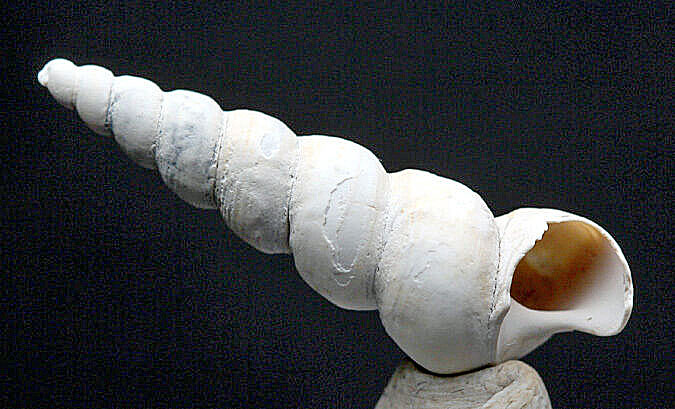
Miocene-Pliocene shallow water marine fossils at Chippokes Plantation State Park, Virginia
Deborah Painter (USA) On a cool, early December day in 2020, my friend David Hawk and I decided we simply had to search for fossils after not doing so for months, and also not be stopped by the chill or the coronavirus. Rather, we would prepare for both. We set … Read More

Fossils from Florida, USA
E R Matheau-Raven (UK) Florida has one of the world’s richest fossil deposits of both terrestrial and marine origin, encompassing over 2,000 known fossil locations. The state is famous for its Pliocene/Pleistocene fossil fauna but also has a rich and diverse Miocene heritage, plus its coastal waters abound with giant … Read More